Breaking Up with the Algorithm
Digital Minimalism for Moms: My current set up for deactivating the comparison trap and putting technology back in its place as a former marketing manager and mom
I’ve gone down the digital minimalism rabbit hole, and I’m not ashamed!
If you are new here, I have been writing on Substack for about a year and a half in different forms and in different publications. But I’ve been writing on this specific one since October of 2025, when my previous one accidentally got deleted during an email update. (Tragic, I know!)
Prior to that, I spent all of 2025 trying to sharpen my marketing resume. As a former social media marketing manager turned stay-at-home mom (I was laid off in 2020 for the pandemic and became a mom in that same year!), I was so DONE with doomscrolling and told myself if I was going to be online, I needed to CREATE more than I consumed. So I did!
I dove headfirst into the world of shortform content creation and man, things had changed so much!
It was a very mentally engaging and creatively stimulating year, but my writing had taken a back seat during that time.
Also around this time, I was finally starting to really come out of mom burnout. My message and writing was more centered on what it was like to rebuild a softer and slower life in faith and motherhood after burnout, and the rhythms that helped me.
This was when I saw the rise of the “soft, slow living” content, and it was really inspiring at first, but then it devolved into “analog living” as a trend around the end of 2025. By this point I realized that I was getting so wrapped up in learning how to grow on TikTok, Facebook, and Instagram, as well as Pinterest and YouTube. Even though I had published an e-book and a children’s book in 2025, I really wanted to refocus more on my long-form writing and long-form video making. I do enjoy making video content and want to grow in that skill, but the growth mindset—as someone who was just trying to keep their résumé up to date—was really starting to wear on my motherhood.
The Reality Behind the Screen
So with all that, I took a step back from content creation in December. Right before I did, I saw the analog living trend everywhere. Even though I was super into this slow and soft living content, the more I got into creating content, the more I realized just how you could manufacture anything to appear a certain way—even if there was an element of truth. It started making me cynical.
When I started seeing people post more about replacing digital things with more analog themes, just being more offline and getting into hobbies, I really started to look down on people (I wrote a whole article about the heart check that happened here).
But then, I decided to try to lean more into the trend (if you can’t beat them, join them I guess!).
Even if this was something being hijacked by companies to sell products, or being used as fodder for the algorithm by more disingenuous creators, I did truly see the heart behind it. There were people across all platforms who really wanted to dial into this type of intentional living.
I started leaning more into it when I focused more on writing here on Substack and I connected with a bunch of like-minded creators, writers, and artists who wanted to share their art and journeys of prioritizing motherhood and faith. It was so special to find this online space to connect, encourage, and learn from each other.
I used to write little monthly updates about what I was doing to live more analog but I stopped when it became more of my actual lifestyle and the main mission behind my message.
The more I started writing about it instead of creating content around it, the more it really took off in my everyday life. And that’s what has brought me to digital minimalism.
What is Digital Minimalism?
So what is digital minimalism? It really started with the book Digital Minimalism (shocker!) by Cal Newport. I’m about halfway through it, but it’s been really intriguing and great. Cal is someone who was not a big user of social media, really, if at all. And he wrote this in 2018. It has been almost a decade since he wrote it, and I honestly feel like social media and digital fatigue have advanced at such a rapid pace even since then.
But he really deep dives into the psychology and science behind these apps and their design for addiction. He started an experiment trying to encourage people and document their efforts of not just abstaining from social media and technology—even including things like television and music—but trying to really focus in on what your goals are, your needs, and what aspects of technology provide not only a small benefit, but the maximum benefit, to where it makes more sense to have it in your life as opposed to not having it.
There are a variety of different people that he has interviewed who have a variety of different boundaries and exceptions. It’s been super intriguing because about a month and a half ago, I reached a breaking point with social media. Trying to promote my writing and show up as a writer online can quickly turn into this overwhelming desire to grow and focus more on analytics. You go down the spiral of how to essentially hack all the different algorithms so you can drive traffic to your Substack.
Even on Substack itself—which is a slower-paced app—there are still times where I’m thinking: Am I writing enough? Am I using the right search optimization? Does anyone even really care? It was really creeping into my everyday life to the point where I was constantly thinking about what I was going to write next or how I could promote my current article. Something that brings out so much creativity and joy, and is mentally stimulating, can quickly turn into something that takes me away from my main goal of honoring God, honoring my family, and encouraging others through my writing without taking away from my life.
Then I started to look at all the other habits in my life. I am someone with ADHD, and I did try to have a few different tools—like carrying my Kindle and a notepad around to replace what I was using my phone for—but that was overwhelming and wasn’t productive. I tried using a planner, too. I just really had to grapple with: What does it look like for me, as Sarah, to be digitally minimal?
The 4-Week Detox and What I Learned
One thing Cal encourages is doing a 30-day detox. When I hit this point with social media, I wrote an article about how hard it has been for me to delete and deactivate things.
Especially because even if you try to delete it, you have a 30-day period of being able to get it back.
June was a very busy month, and with both of my kids home from school, I really wanted to try to be as intentional as I could during the summer. So, I took about 4 weeks off of Facebook and Instagram. I did want to take time off TikTok, even though that’s my primary discovery tool, but I was on vacation and then sick for a week, so I did experiment with what it looked like to post and grow on there. It actually did serve me well during that time, but anytime I was with my children, I was not on it.
Even just having that time off of Facebook, Instagram, Pinterest, and YouTube, I felt like there was a creative resurgence and clarity that came through. In Digital Minimalism, Cal talks about taking that detox time and then reintroducing social media and digital tools, seeing how you feel whenever you reintegrate.
That is why this article is a little bit late. Over the last 6 months, I’ve tried a lot of things: a device like a Brick, screen time limits, completely being off of all social media except for the ones I’m trying to be consistent and creative with (like YouTube and Substack), trying a flip phone... it’s a lot of trial and error, and it’s not one size fits all, even for me.
There are times where after a long break from something, I feel like I can come back refreshed and renewed. I had that break for a long period of time, and I was able to rebrand a little bit and really hone in on what I wanted to talk about, what I want my writing to be about, what I want the message to be, and the boundaries I need to keep.
This last week, I reintroduced social media back into my life and my mix. I know that I don’t want to use it personally, but I do want to use it as a creative who is trying to encourage and equip others through my writing and through my art, and I do want to eventually build a career out of this.
Now that I’ve had a week of having these apps back in my life—getting excited about being back on, and now actually feeling how it feels since the newness has worn off—here is my digital minimalism update and what my setup is going to be to show up intentionally as a mom, Christian, and writer for the season that I’m in.
My Intentional Tech Setup & Boundaries
Based on everything that I’ve experimented with since December, with a few weeks of detox paired with a week of incorporating everything back, I’ve determined that I do want to use social media and technology to some extent for connection—to keep up with things for my daughters’ schools and my community, such as the amazing Buy Nothing group that I am a part of (seriously, I’ve gotten so many wonderful things like plants, homemade pasta sauce, and art supplies! It’s just a really great way to give away things that I no longer need without giving them to thrift stores that have hijacked their prices and aren’t even really good anymore, LOL.)
But ultimately, I want to build my writing into something that is a ministry, a mission field, and a means of monetization eventually. Here is how I’m structuring my digital boundaries:
1. The 45-Minute Total Cap
I’m going back to screen time limitations on my phone with my husband having the passcode. This worked really well before. Something new I’m going to be trying is 45 minutes total for everything.
I didn’t have screen time limits before with Substack, but I’ve noticed that the comparison feeling can creep in whenever I start to be on Substack too much—comparing my work to other people’s work or checking analytics too deep instead of just enjoying the community, camaraderie, and creativity. So, as much as I love Substack, and it definitely is a better alternative than other social media, I want to have just 45 minutes total to use throughout the day. That includes checking up on the Buy Nothing group or Facebook groups I have for my neighborhood and my kids’ schools.
2. Strategic Platform Limits
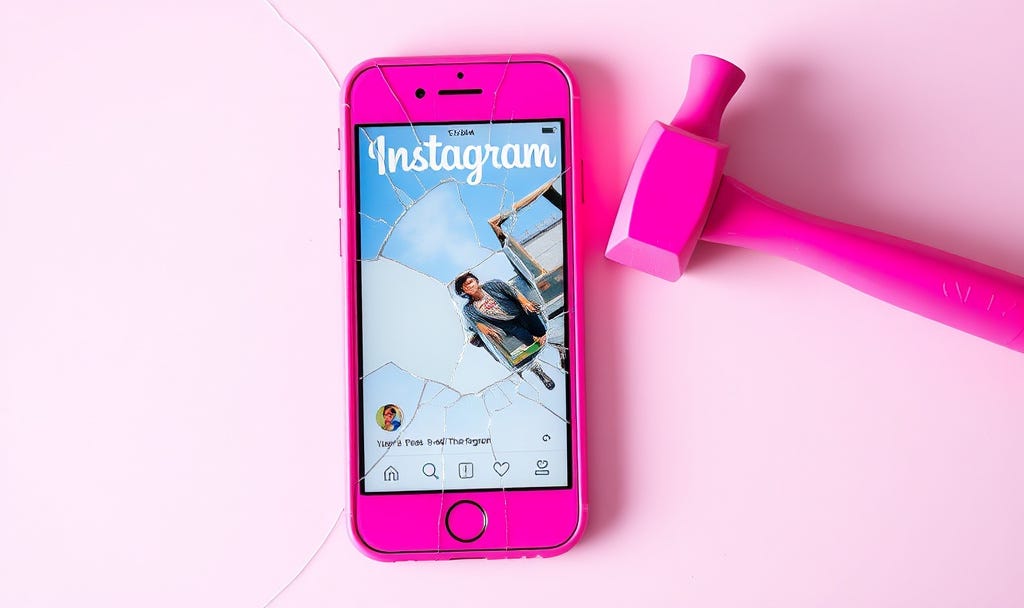
I think I’m going to deactivate Instagram and keep TikTok for now, or maybe get rid of TikTok in the next few weeks. I really enjoy using TikTok just because I can make and create videos and edit them really simply and very quickly. I cross-post those to YouTube, as I do enjoy making longer-form videos for YouTube, and TikTok has just been the easiest place for me to do that.
If I have 45 minutes for all of those apps, that enables me to have enough time to make things and create without taking too much time to scroll. 45 minutes between all of those apps may sound like a lot of time, but when it comes to creating things—especially videos—that takes a lot of time. I really want to save that time to create things instead of scrolling. Having that cap, especially since I am including Substack in there, honestly will not leave a lot of time at all. I think this will be really good for my mental health.
So, I plan on keeping Facebook (for community updates and monetization as I currently make a little money over there) and TikTok (for easy video editing and writing promotion) with the goal to primarily focus on building things out on YouTube and Substack.
3. The Flip Phone / Smartphone Hybrid System
As much as I want to just switch over to a flip phone permanently, there are just too many things that my husband and I collaborate on and too many functional benefits tool-wise that are streamlined by being on my smartphone.
But I have really enjoyed having my flip phone as kind of a replacement Apple Watch. My plan is to continue taking that out whenever I am out with my girls, so that way I can reach people if I need to. There is an internet browser in case I really need to access something online, but it’s very clunky to use and not good for scrolling at all. It has Maps and YouTube, which is primarily what I use on it.
When I’m at home, I have a little phone mount next to my Bluetooth landline. The skill I really need to work on the most when I’m at home is keeping my smartphone put away and not bringing it out to scroll. I want it up and away for two reasons:
1. I lose it constantly in my house.
2. It can stay connected to the Bluetooth landline.
My oldest knows exactly where it is, so that way she can call from the Bluetooth landline in case there’s an emergency and something happens to me.
Moving Forward
So, that is my plan and my digital minimalism update for the foreseeable future!
Thank you for being here sweet friend! Leave a comment below if this has been helpful, and let me know anything else that you’d like to see!
Let’s live this life more intentionally, together 🫶🏼.
Love,

*If you’ve been encouraged by this and want to support my writing, I have set up a “buy me a coffee” link to make a one-time donation. This honors the time and resources that go into me creating gentle, faith-filled content. While it is greatly appreciated, it is not expected. I am deeply thankful to simply have your presence here!
You can also support me by checking out my growing digital resource library. This resource includes lifetime access as new tools and reflections are added over time. It’s designed to be a one-stop companion to the ideas I share here—something you can revisit whenever life feels heavy or overwhelming.